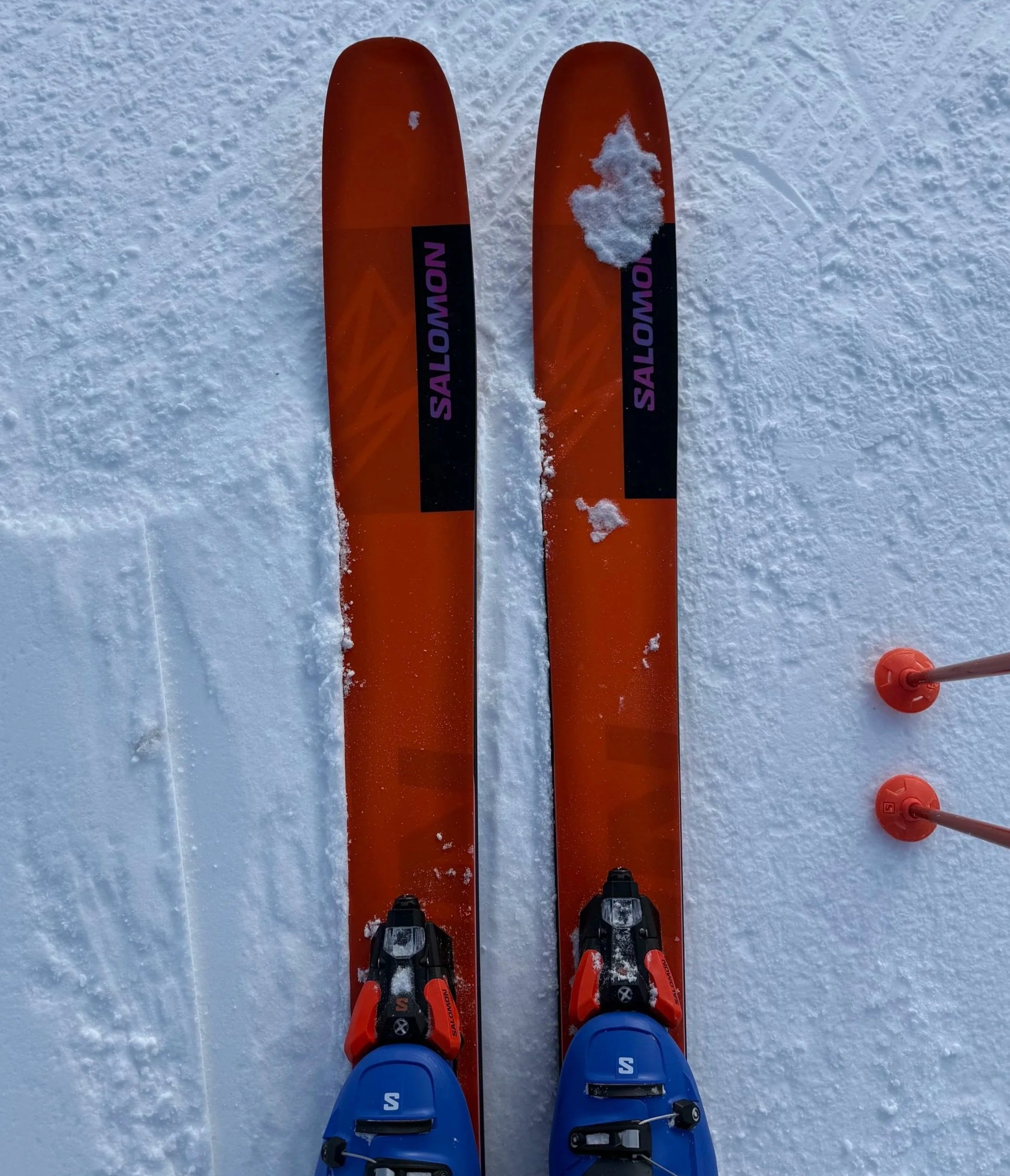

2025 Salomon QST 106
A surfy and damp option for skiers looking for versatile freeride performance in a creative and playful package.
Editors Note: Salomon has refreshed their QST family of skis for the 2026 model year. Construction, shaping, and performance for the new QST’s are similar, but there are changes to each of those mentioned elements for 2026. The 2025 version in this review will be slightly different than the current version that you can buy from the manufacturer at the time of writing.
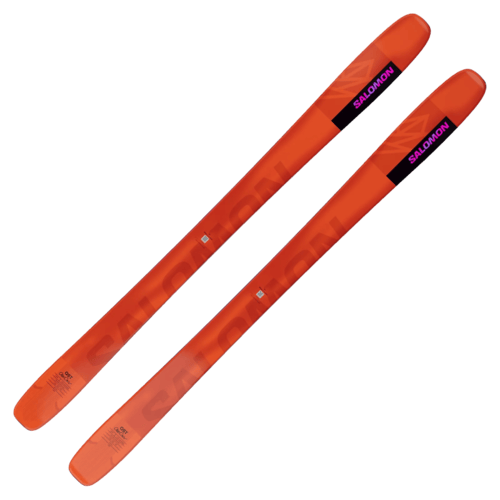
Image courtesy of SkiEssentials.com
Initial Thoughts & Construction
Whether you’re charging hard and fast lines down a snowy technical zone or cruising some laps at your local hill on a powder day, the QST 106 from Salomon is a great choice. This creamsicle look-a-like from Salomon walks a fine line between playful and surfy alongside serious and hefty, giving skiers the ability to dabble in a bit of both worlds.
In the 2025 106, Salomon uses a combination of materials in the construction that play a major role in the skis performance. Starting with the C/Fx laminate, they combine carbon and flax into a layer of the ski to bolster power and responsiveness without the weight of metal. In addition, at the tip and tail of each ski you’ll find cork material used to reduce vibrations and provide smoothness. Salomon calls it “Cork Damplifier”, and from my experience, it works quite well.
Salomon tags the 106, in the 181cm length I’ve skied, with a 1980 gram weight. After a few days of skiing with that number in my head, I went home and threw the QST on the scale. After subtracting the weight of the bindings, I came out to a measured average of 2175 grams. That’s a discernible difference between stated and measured weights, and you’ll feel that heft when cruising around at slower speeds, for sure. Despite the weight, the 106 still maintains a playful and maneuverable attitude and ethos. The design and shaping contribute to a lot of that personality: with an eye-popping amount of taper and rocker, the QST is a floaty and surfy performer in most any type of snow.
At 106mm underfoot, it’s not designed to stay on-piste all day, and it would rather spend time in soft snow and uneven terrain than on a firm groomer. While I was making my way through the trees at Stowe, the 106 was humming. They were always willing to listen to my directions over little crests and jibs, but really had their strength shine through in wider and faster turns. The mass and dampness was felt as you drive some quick corners through the snow. It takes effort to drive the 106, and the skier is able to depend on a solid bit of feedback from it. Not necessarily responsive, with a 19m turn radius, the QST sits in a nice zone of willing to participate in your turns but doesn’t get too wiggly when you don’t want it to be.
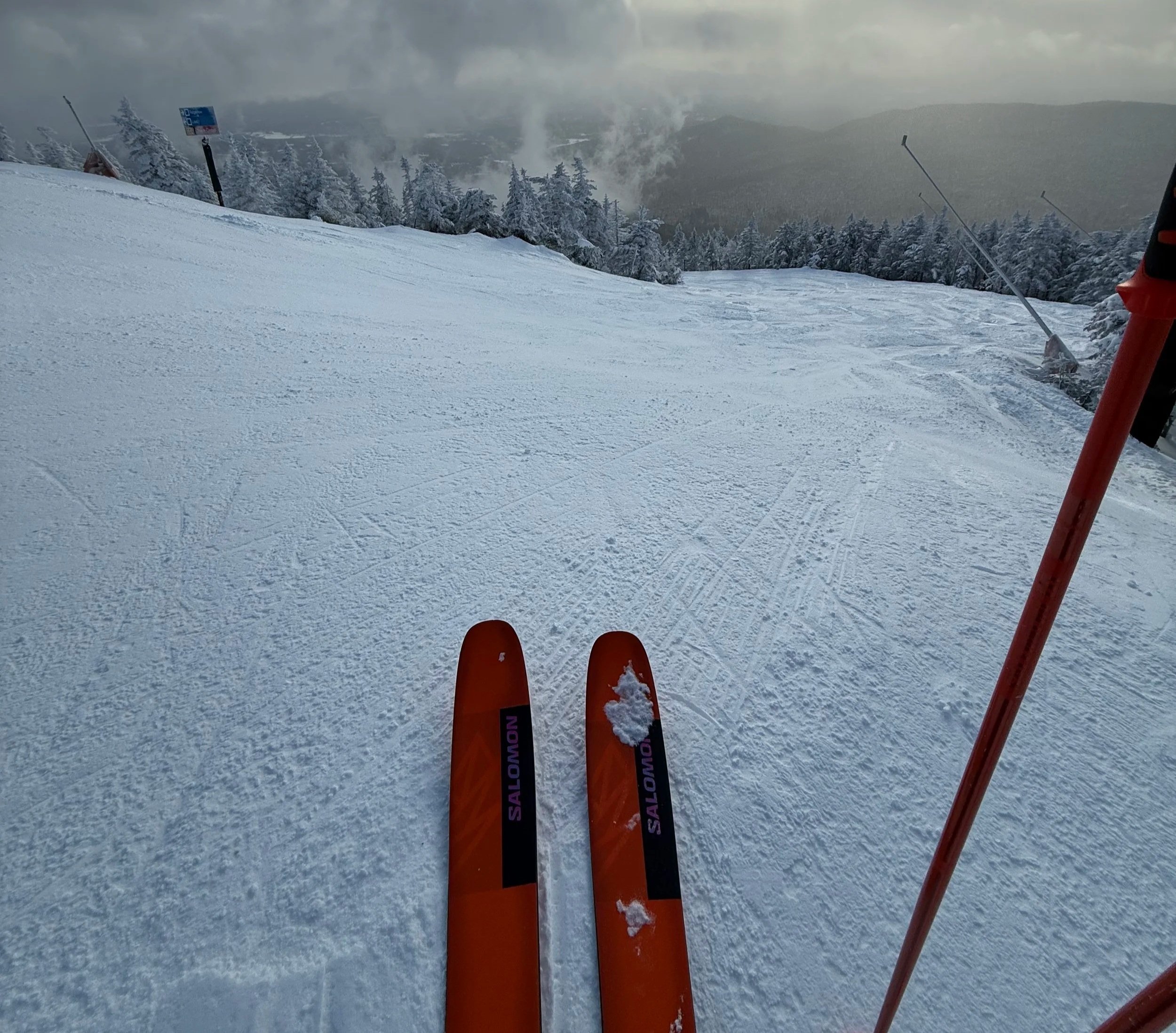
Looking down Ridgeview off the Fourrunner Quad at Stowe Mountain Resort
Ideal Application
Im not gonna sit here and tell you it’s excellent in all types of snow conditions at every mountain in America. The 106 loves all kinds of soft snow: whether it’s untracked powder, the late-afternoon leftovers, or something in between. If you’re considering the 106, current or previous generation, you should be spending the majority of your time in bountiful snow. A great option for a New England powder ski, many people seeking a tool for the deeper days will find a lot to like here.
The 106 falls squarely into the “freeride” category, and it’s comfortable going fast in all kinds of fun and challenging terrain. Combine the notable weight with the firmer flex pattern and the QST can be a weapon on the feet of capable skiers. During testing, I took them through my first few laps of the season through Blind Ambition at Sunday River. Low tide conditions combined with firm and grippy snow made for some entertaining turns through the glade. While I’ve skied through the glade on softer and more approachable skis, the 106 was arguably the most appropriate pair I’ve taken through there. Substantial yet always maneuverable, the 106 made for a fulfilling few laps through one of my favorite zones.
I experienced early-December goods at Stowe Mountain Resort with the 106, as well. Any kind of soft and abundant snow makes the QST an absolute winner. Groomers, bumps, trees, it doesn’t matter, the 106 is happy to take you where you’re off to. The 106 floats excellently, and is dynamite in powder. The tip shape and taper lets the ski glide through deep snow easily and happily. Often in skis with similar shapes and floatation, you’ll be making a notable sacrifice when back on a groomed run. That’s where the versatility of the 106 help it stand out from the pack: the shape and profile blends with the weight combine to create a ski that trenches turns on soft groomers. A complete soft snow package, the 106 is a top choice for those searching for a comprehensive and versatile choice in this category.
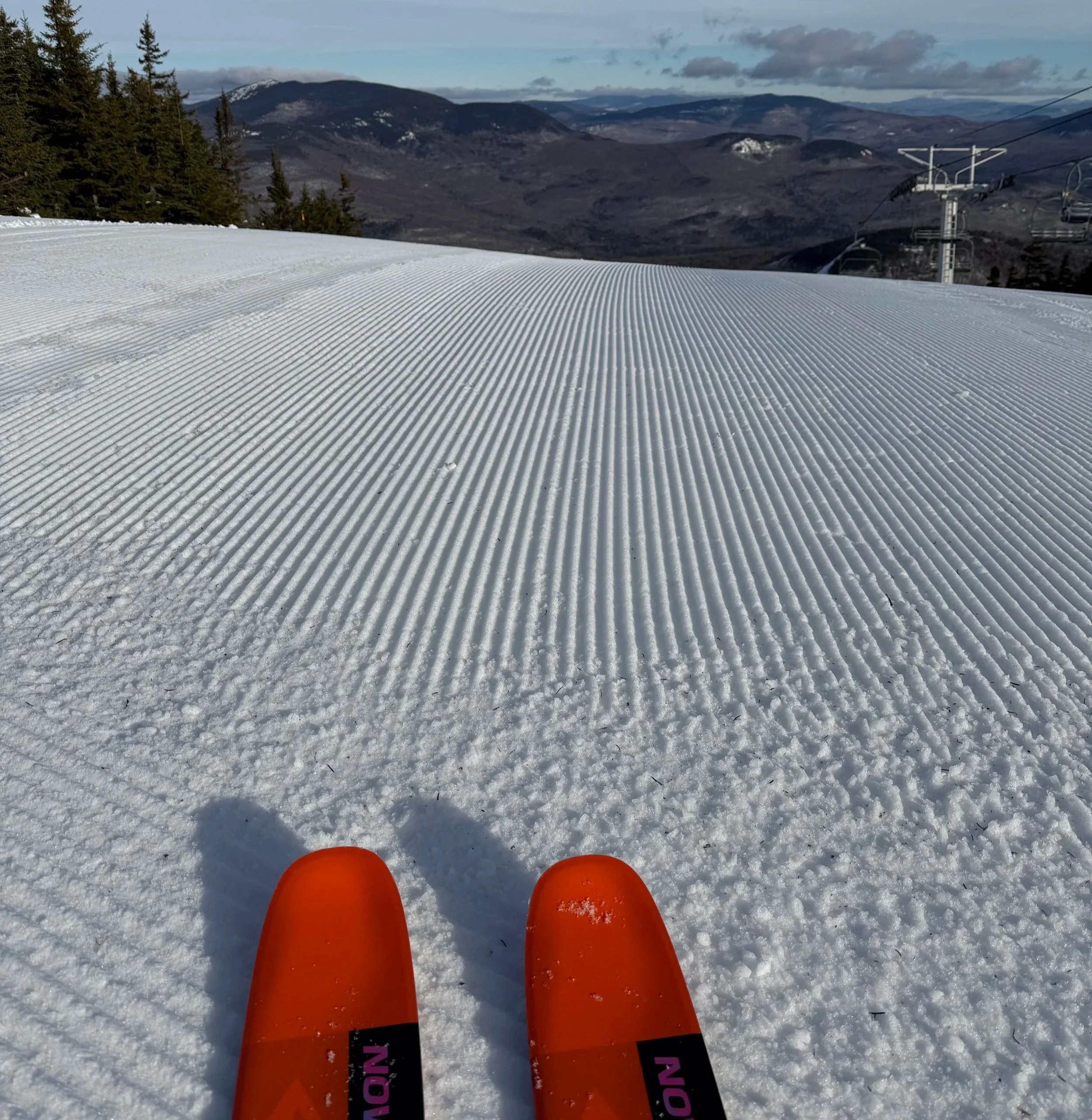
First chair and tracks down Upper Airglow off the Aurora Chair at Sunday River.
I’ve spent a few days that many would consider “inappropriate” for the 106 as well. With cold, fast, and firm conditions everywhere, the QST’s resilience was on display to start my dedicated early-January testing weekend. When I say firm, I really mean it. I caught ski patrol dropping the rope to the Aurora Peak zone at Sunday River, and snagged the first civilian laps down Paradigm and Airglow. Blue square and single-diamond trails respectively, the very firm untracked groomers were fast, yet doable.
Qualifiers of the conditions aside, my first tracks on the frigid slopes were extra enjoyable. I enjoy skis in this width range, and have been daily driving a ~100mm underfoot ski for a few years at this point. The width and lack of performance-oriented metal here would disqualify many skiers on that day, but for me, it was a great time. The smooth power delivery you get from the C/Fx and the cork combined with the stiffness right underfoot made for some great laps.
With a hefty bit of weight you’re carrying around, however, you can’t be too lazy. The stiff-ish flex will take you for a ride if you’re not driving it or ready for it at slower speeds. If you are unwilling to hit the modest pace the 106 prefers, be aware of that. The 106 of course prefers soft snow, but for a ski this wide, it handles variable conditions much better than riders would expect. The QST is trustworthy and strong, but I’d hesitate before I call it a truly “well rounded” ski. It really is capable of handling most anything you throw at it, but your carving ski is certainly a better option on most firm pistes.
The Numbers
Sizes available: 157 cm, 165 cm, 173 cm, 181 cm, 189 cm
Sidecut: 139 mm (tip) - 106 mm (waist) - 126 mm (tail) (181 cm)
Turn Radius: 19m (181cm)
Quiv3r Measured Weight: 2175 grams (181 cm)
(note Salomon states the weight for the 2025 QST 106 in the 181 cm length is 1980g. Our pair averaged out to the above figure.)
Quiv3r Measured Length: ~180 cm (181 cm)
Mount Points: One recommended point, recommended line is about -9 cm from center.
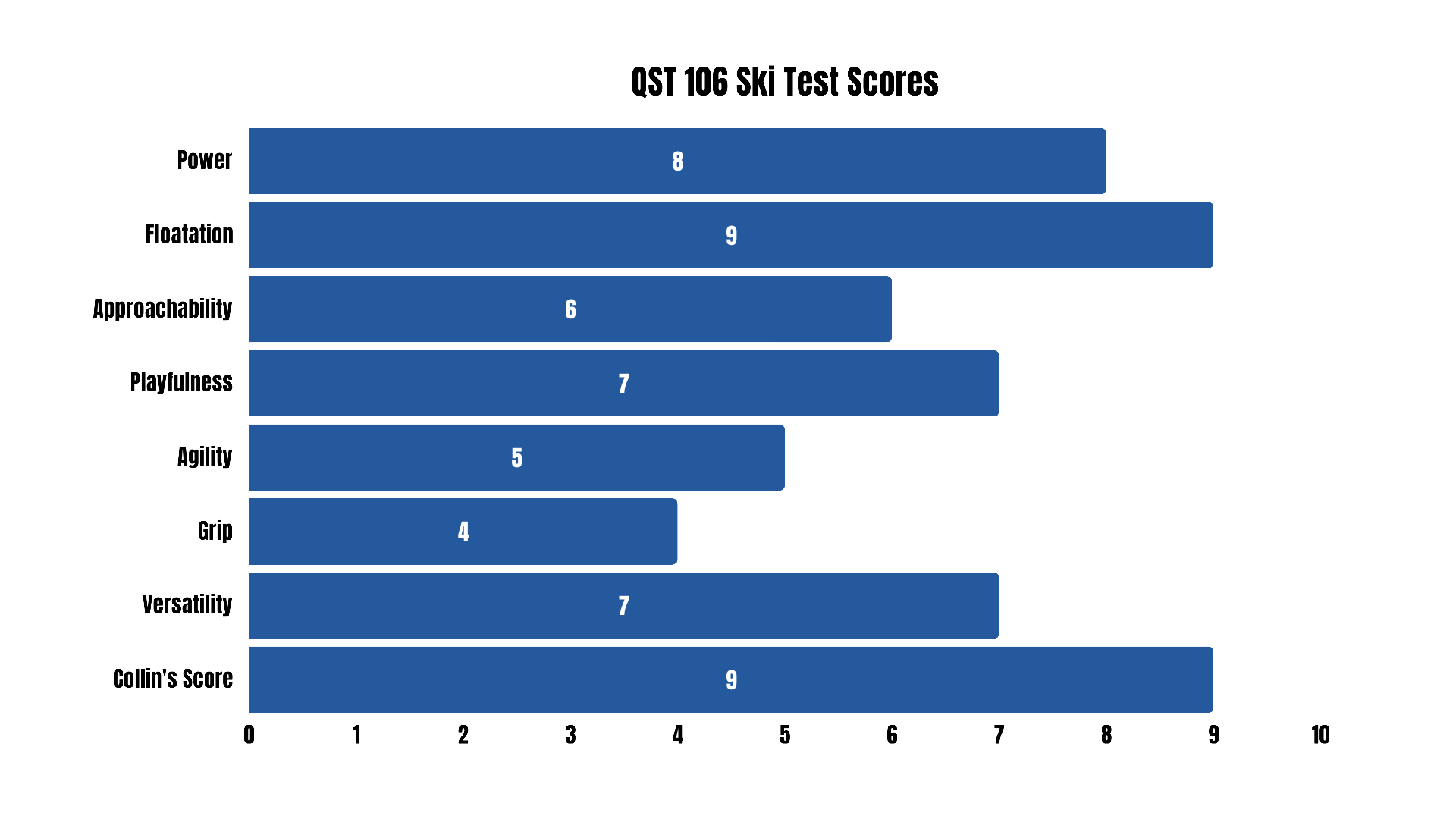
2026 Quiv3r Ski Test Scores
Tested by: Collin Wiedersheim
Days skied: ~10
Boots: 2025 Salomon S/Pro Supra 130, 27.5 Mondo, custom footbeds
181 cm length, Salomon Strive 14 mounted at factory recommended line
Final Thoughts
The QST 106 is a soft snow freeride weapon, capable of supporting elite athletes doing extraordinary things in deep, manky snow. The QST 106 also can be a resort-only powder ski for weekend warriors seeking a fun option on a deeper day. Not many skis can say both of those things, and fact underscores the versatility the 106 provides in this category. It might be a bit wide and burly for everyday use here in the East, but if there’s soft snow around, grab a QST 106 for an intuitive and seamless experience.